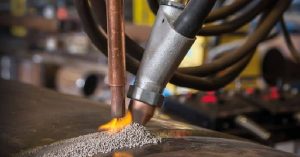
Arc welding is one of the most widely used welding processes in the world. It is known for its efficiency, affordability, and versatility in joining metals. Whether you’re a beginner looking to get started in welding or a professional seeking a deeper understanding of the process, this guide provides a comprehensive overview of arc welding, its working principles, types, equipment, safety measures, and key techniques.
What Is Arc Welding?
Arc welding is a welding process that uses an electrical arc to generate intense heat, which melts and fuses metal pieces together. The process involves an electrode, which carries an electric current, and a workpiece that is connected to the welding circuit. When the electrode is brought close to the workpiece, an electrical discharge (arc) occurs, generating temperatures of up to 6,500°F (3,600°C), hot enough to melt most metals.
Once the molten metal cools, it solidifies to form a strong bond between the joined pieces. Arc welding is widely used in industries such as construction, shipbuilding, automotive repair, and manufacturing due to its strength and efficiency.
How Arc Welding Works
Arc welding works by establishing an electrical circuit between the welding electrode and the workpiece. The key components involved in the process include:
- Power Supply: Provides the necessary electrical energy to create an arc. It can be either AC (Alternating Current) or DC (Direct Current).
- Electrode: Acts as the conductor for electricity and can be either consumable (melts and becomes part of the weld) or non-consumable (does not melt, such as tungsten in TIG welding).
- Welding Arc: The electrical discharge between the electrode and workpiece generates intense heat that melts the metals.
- Shielding Gas or Flux: Protects the molten weld pool from atmospheric contamination.
- Work Clamp (Ground Clamp): Completes the electrical circuit between the power supply and the workpiece.
Once the arc is struck, the intense heat melts the edges of the base metal and the electrode (if consumable), forming a weld pool. As the weld cools, it solidifies to create a strong and durable joint.
Types of Arc Welding
There are several types of arc welding, each suited for different applications:
1. Shielded Metal Arc Welding (SMAW) – Stick Welding
This is one of the most common and beginner-friendly arc welding processes. It uses a flux-coated electrode that creates a protective gas shield around the weld.
- Pros: Portable, simple setup, works on various metals.
- Cons: Slower process, slag removal required.
- Common Uses: Construction, repair work, pipeline welding.
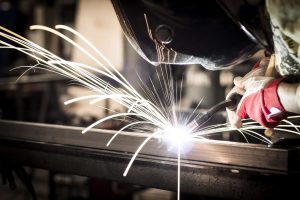
2. Gas Metal Arc Welding (GMAW) – MIG Welding
MIG welding uses a continuous wire electrode and a shielding gas to protect the weld from contamination.
- Pros: Fast, easy to learn, minimal slag.
- Cons: Requires shielding gas, not ideal for outdoor welding.
- Common Uses: Automotive repair, fabrication, manufacturing.
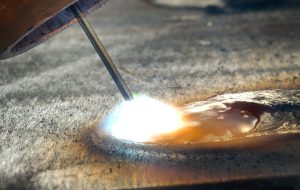
3. Flux-Cored Arc Welding (FCAW)
Similar to MIG welding but uses a tubular wire filled with flux, eliminating the need for an external shielding gas.
- Pros: Good for outdoor welding, fast deposition rate.
- Cons: Produces more smoke, requires specialized wire.
- Common Uses: Heavy equipment repair, shipbuilding.
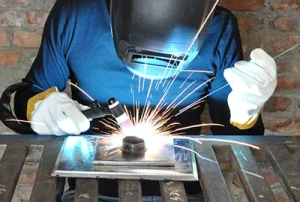
4. Gas Tungsten Arc Welding (GTAW) – TIG Welding
TIG welding uses a non-consumable tungsten electrode and a separate filler metal to create precise and clean welds.
- Pros: High-quality welds, ideal for thin metals.
- Cons: Slower process, requires skilled hands.
- Common Uses: Aerospace, stainless steel welding, artistic welding.
5. Submerged Arc Welding (SAW)
SAW uses a continuously fed wire electrode and a blanket of granular flux to shield the weld area from contamination.
- Pros: High efficiency, deep penetration.
- Cons: Limited to horizontal positions, not portable.
- Common Uses: Shipbuilding, heavy structural welding.
Essential Arc Welding Equipment
To get started with arc welding, you’ll need the following equipment:
- Welding Machine: Provides the necessary electrical power.
- Electrodes/Welding Wire: Depending on the welding type, either consumable or non-consumable electrodes are used.
- Work Clamp (Ground Clamp): Connects the workpiece to the welding machine.
- Shielding Gas (for MIG and TIG welding): Protects the weld from oxidation.
- Protective Gear: Includes a welding helmet, gloves, fire-resistant clothing, and safety boots.
- Chipping Hammer & Wire Brush: Used to remove slag from stick welding.
Safety Precautions in Arc Welding
Welding involves high heat, bright light, and hazardous fumes, making safety a top priority. Here are essential safety tips:
- Wear a Welding Helmet: Protects eyes from UV radiation and sparks.
- Use Protective Clothing: Fire-resistant jackets, gloves, and boots prevent burns.
- Ensure Proper Ventilation: Arc welding produces fumes that can be harmful when inhaled.
- Check Equipment Regularly: Faulty cables and machines can cause electric shocks.
- Avoid Flammable Materials: Keep your workspace clear of combustible items.
Basic Arc Welding Techniques
For beginners, mastering the following welding techniques is crucial:
- Striking an Arc: Lightly tap or drag the electrode against the workpiece to initiate the arc.
- Maintaining Arc Length: Keep the electrode at an optimal distance (about 1/8 inch) from the workpiece.
- Controlling Travel Speed: Moving too fast results in weak welds, while moving too slow causes excessive heat buildup.
- Proper Angle and Positioning: Typically, a 10-15 degree angle works best for stick and MIG welding.
- Weaving Technique: Used for wider weld beads, moving the electrode in a zig-zag or circular motion.
Common Arc Welding Defects and How to Fix Them
- Porosity: Caused by trapped gas bubbles; prevent this by using clean materials and proper shielding gas.
- Cracks: Result from excessive heat or rapid cooling; use proper preheating and cooling techniques.
- Undercut: A groove in the base metal due to excessive heat; prevent by maintaining the correct angle and speed.
- Slag Inclusion: Happens in stick welding; remove slag properly and use correct travel speed.
Conclusion
Arc welding is an essential skill in metalworking and fabrication. Understanding its principles, techniques, and safety precautions will help you master the craft. Whether you’re a beginner or an experienced welder, selecting the right welding method for your needs and practicing proper techniques will lead to stronger and more efficient welds.