Marine welding and fabrication are essential for the construction, repair, and maintenance of ships, offshore structures, and other marine-related equipment. Unlike conventional welding, marine welding requires specialized techniques and materials due to the harsh conditions of the marine environment, including exposure to saltwater, high pressure, and extreme temperatures.
In this comprehensive guide, we will explore marine welding and fabrication, the different welding techniques used in the industry, the importance of corrosion-resistant materials, safety considerations, and how Gamun Welders and Fabricators can help you with your marine welding needs.
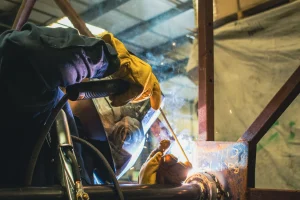
What is Marine Welding and Fabrication?
Definition and Importance
Marine welding and fabrication involve joining and shaping metal components specifically for marine applications. This field is crucial in building, maintaining, and repairing ships, barges, offshore drilling platforms, bridges, underwater pipelines, and docks.
Due to the challenging environment, marine welding demands high-quality materials, skilled labor, and specialized equipment to ensure long-lasting and reliable structures.
Common Applications of Marine Welding
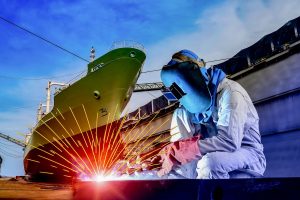
- Shipbuilding and Repair: Marine welding is used extensively in constructing new ships and repairing damaged hulls and ship components.
- Offshore Structures: Welding is essential for assembling and maintaining oil rigs, wind farms, and underwater structures.
- Dock and Harbor Maintenance: Marine welding is used to repair docks, piers, and seawalls.
- Submarine and Underwater Welding: Specialized welding techniques are used for deep-sea structures and pipelines.
Marine Welding Techniques
Several welding techniques are used in marine environments, each suited to specific applications. Here are the most common methods:
1. Shielded Metal Arc Welding (SMAW)
SMAW, or stick welding, is widely used in shipbuilding and repair because of its simplicity and portability. This technique is ideal for welding thick metals and can be used in wet and dry environments.
Pros:
- Works well in outdoor and underwater conditions
- Can weld thick materials efficiently
- Requires minimal equipment
Cons:
- Produces slag that requires cleaning
- Not suitable for thin metals
2. Gas Metal Arc Welding (GMAW/MIG Welding)
GMAW, or MIG welding, is commonly used for welding aluminum and stainless steel in shipbuilding. This process uses a shielding gas to protect the weld from contaminants, making it suitable for dry dock and shipyard welding.
Pros:
- High welding speed and efficiency
- Produces clean and strong welds
- Ideal for automation
Cons:
- Not suitable for underwater welding
- Requires shielding gas, which can be affected by wind
3. Flux-Cored Arc Welding (FCAW)
FCAW is similar to MIG welding but uses a flux-filled wire instead of an external shielding gas. This technique is ideal for shipbuilding, offshore construction, and repairing large metal structures.
Pros:
- Works well in windy and outdoor conditions
- Faster than stick welding
- Suitable for heavy-duty welding
Cons:
- Produces slag that requires post-weld cleaning
- Limited suitability for thin metals
4. Gas Tungsten Arc Welding (GTAW/TIG Welding)
GTAW, or TIG welding, is known for its precision and high-quality welds. It is widely used for welding stainless steel, aluminum, and non-ferrous metals in marine applications.
Pros:
- Produces clean and precise welds
- No spatter or slag
- Ideal for thin materials
Cons:
- Slower than other welding processes
- Requires highly skilled welders
5. Underwater Welding (Wet and Dry)
Underwater welding is critical for offshore maintenance and repairs. There are two types:
- Wet Welding: Conducted directly in water, using waterproof electrodes.
- Dry Welding (Hyperbaric Welding): Performed inside a dry chamber, reducing contamination.
Pros:
- Enables repairs without bringing structures to the surface
- Cost-effective for emergency repairs
Cons:
- Requires specialized skills and training
- Risk of electric shock and decompression sickness
Importance of Corrosion-Resistant Materials in Marine Welding
Marine environments expose metals to high salinity, moisture, and extreme weather conditions, leading to corrosion and degradation. Using corrosion-resistant materials is essential for longevity and structural integrity.
Common Materials Used in Marine Welding
- Stainless Steel: High resistance to rust and corrosion.
- Aluminum: Lightweight and resistant to saltwater damage.
- Carbon Steel: Durable but requires protective coatings.
- Bronze and Copper Alloys: Used for components exposed to seawater.
Protective Coatings and Treatments
- Galvanization: Adds a protective zinc layer to prevent rusting.
- Epoxy Coatings: Protect metal surfaces from water damage.
- Cathodic Protection: Uses electrical currents to prevent corrosion.
Safety Considerations in Marine Welding
Marine welding presents unique risks, including exposure to electric shocks, fire hazards, toxic fumes, and underwater pressure-related dangers. At Gamun Welders and Fabricators, we prioritize safety protocols to protect our welders and clients.
Key Safety Measures
- Proper Protective Gear: Welders use flame-resistant clothing, gloves, helmets, and respirators.
- Ventilation Systems: Ensuring adequate airflow to remove toxic fumes.
- Fire Safety Protocols: Using fire-resistant blankets and monitoring flammable materials.
- Training and Certification: Ensuring welders are qualified and trained in marine welding standards.
- Regular Equipment Maintenance: Keeping welding machines and tools in top condition.
Why Choose Gamun Welders and Fabricators?
1. Expertise in Marine Welding
With years of experience in marine metalworks, shipbuilding, and offshore fabrication, we guarantee high-quality services tailored to meet client needs.
2. State-of-the-Art Equipment
We utilize advanced welding technology and cutting-edge equipment to deliver superior craftsmanship.
3. Commitment to Safety and Quality
At Gamun Welders and Fabricators, we adhere to strict safety guidelines and industry standards to ensure reliable and durable results.
4. Custom Solutions for Your Marine Projects
We provide tailored fabrication solutions, including customized ship components, dock reinforcements, and offshore structural repairs.
5. Cost-Effective and Efficient Services
We offer competitive pricing and efficient turnaround times, ensuring that your projects are completed on time and within budget.
Conclusion
Marine welding and fabrication play a critical role in the construction, maintenance, and repair of marine structures. With specialized techniques, corrosion-resistant materials, and strict safety measures, this field requires expertise and precision.
At Gamun Welders and Fabricators, we are committed to delivering top-quality marine welding services tailored to your needs. Whether you need ship repairs, offshore structure welding, or custom metal fabrication, our team is ready to provide durable, efficient, and cost-effective solutions.
Contact us today at Gamun.co.ke to learn more about our marine welding and fabrication services!
